Using Unified Asset Tree
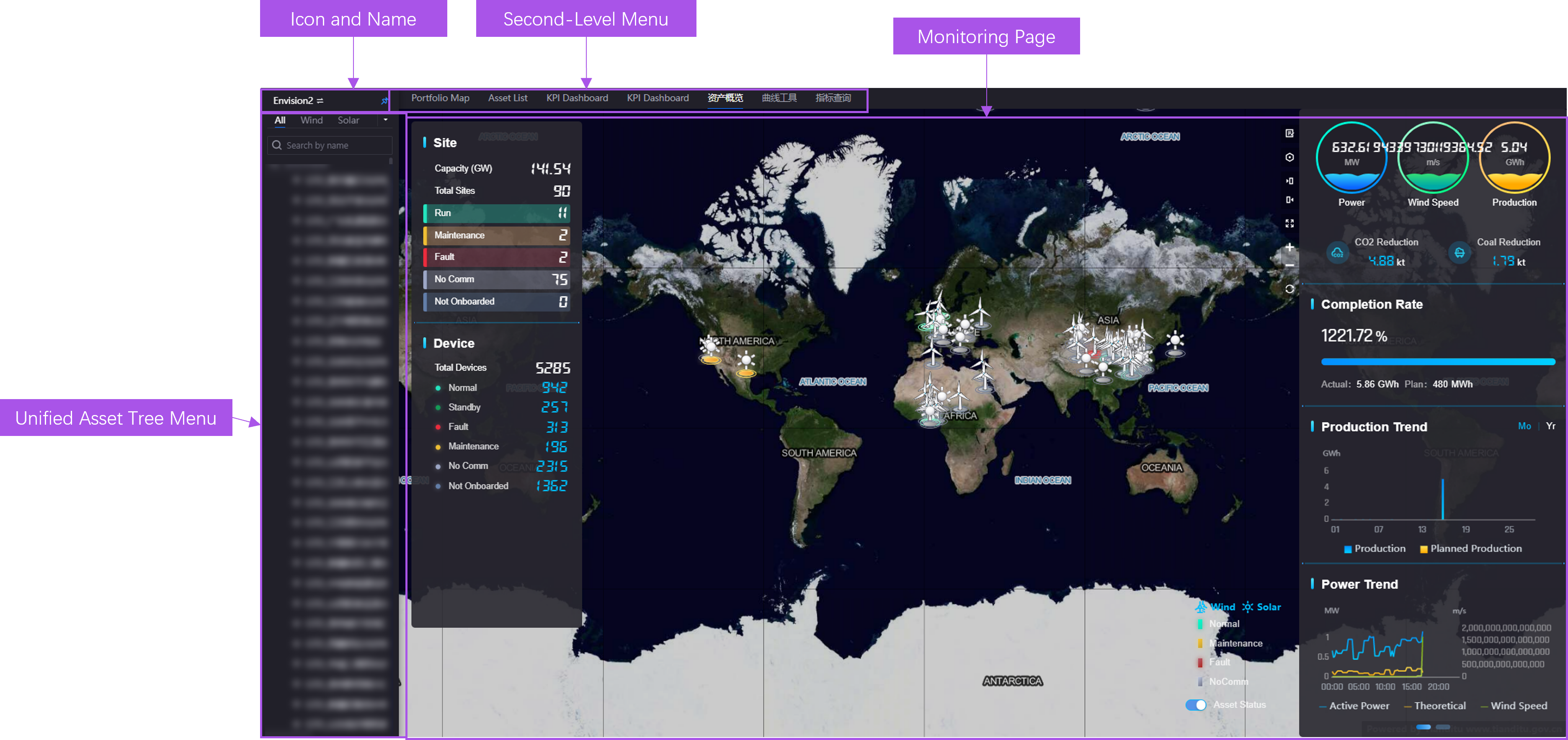
Unified Asset Tree lets users change the asset scope across organization nodes, sites, and devices. Depending on the page and deployment version, it can appear as the legacy Landing Page sidebar, an in-page asset filter, or a multiple-tree switcher. These interfaces share tree data, but selecting an asset can produce different page behavior.
Note
Layout, tree type, and selection behavior are configured by the application developer. If an entry or action described here is absent, the page might not enable it, the deployment might not support it, or your account might lack the required asset permission.
Prerequisites
Before you begin, make sure that:
Your account has menu access to the target page and the required asset permissions.
The target page has an asset filter enabled, or its first-level menu has a legacy Unified Asset Tree configuration.
Identifying the Current Asset Tree
Interface |
Typical location |
Primary purpose |
|---|---|---|
Unified Asset Tree sidebar |
Left side of a legacy Landing Page. |
Navigate organization nodes and associated second-level menus. |
In-page asset filter |
The top of Asset Overview, Asset List, Charting Tool, Common KPI Inquiry, or a Landing Page. |
Change the current page’s query or display scope. |
Multiple asset-tree switcher |
Near the asset filter. |
Switch the data source among trees available to the current user. |
Device tree |
After a site is selected. |
Select devices in the site by device type, flat list, or asset hierarchy. |
Switching Asset Trees
When the page shows a tree switcher:
Select the current tree name or switch control.
Select the target asset tree.
The page reloads the tree’s asset types and available nodes, and retains the current selection where it remains valid.
The multi-asset-tree switcher appears only when all of the following conditions are met:
Multi-asset-tree capability is enabled in the current environment.
The current menu or URL does not use
disableMultipleAssetTree=trueto hide the entry.The current account has multiple accessible asset trees.
When a tool page is embedded in a Landing Page, the tool page usually hides its own multi-asset-tree entry to avoid duplicating the asset tree at the top of the container.
Selecting Assets by Page
Selecting a node does not necessarily open a detail page; the outcome depends on the page:
Page |
Selectable scope |
Result of selection |
|---|---|---|
Asset Overview |
Group, region, or site; multi-site dimensions can select multiple sites. |
Updates the map, canvas, and widget scope; selecting a site can open its single-site map. |
Asset List |
Site, region, or device, according to the configured asset dimension. |
Refreshes the list, cards, summary, and filters. |
Charting Tool |
Site group, site, or device. |
Updates the analysis assets and queries their trend data. |
Common KPI Inquiry |
Site, device group, or device. |
Updates the reporting scope; device big-data mode might not expand device nodes. |
Landing Page |
Organization levels, sites, and devices allowed by the page configuration. |
Sends asset context to embedded pages, which refresh after they integrate the relevant SDK. |
Nodes can appear in the following states:
Visible and selectable: The current account has permission, and the node contains assets that match the page’s asset type and dimension.
Visible but not selectable: The node exists to show the organization hierarchy but does not meet the associated-resource or node-permission check conditions.
Invisible: The node is removed by asset type, dimension, page filters, or the unauthorized-parent-node filtering rule.
Switching Device-Tree Style
The flat and hierarchical styles apply only to device selection on some pages; they are not universal Unified Asset Tree styles:
Flat: Lists devices by device type and suits sites with a simple device hierarchy.
Hierarchical: Displays devices by asset parent-child relationships and suits sites with child devices or components.
The style switcher appears at run time only when the page supports device dimensions, configures device types, and enables both styles. Common KPI Inquiry in device big-data mode normally does not show a device tree.
Associated Resources and Permissions
When an organization node has associated resources and the page enables them, selecting that node allows the page to use the associated-resource data. For a leaf node, the current implementation prioritizes the first associated resource.
Associated resources do not automatically bypass permission checks:
When the page enables node permission checking, nodes without associated resources or permissions can be visible but not selectable.
With
filterParentNodes=true, unauthorized parent nodes are filtered out of the tree. This is a different mechanism from a node that is visible but not selectable.
Pinning and Resizing a Legacy Sidebar
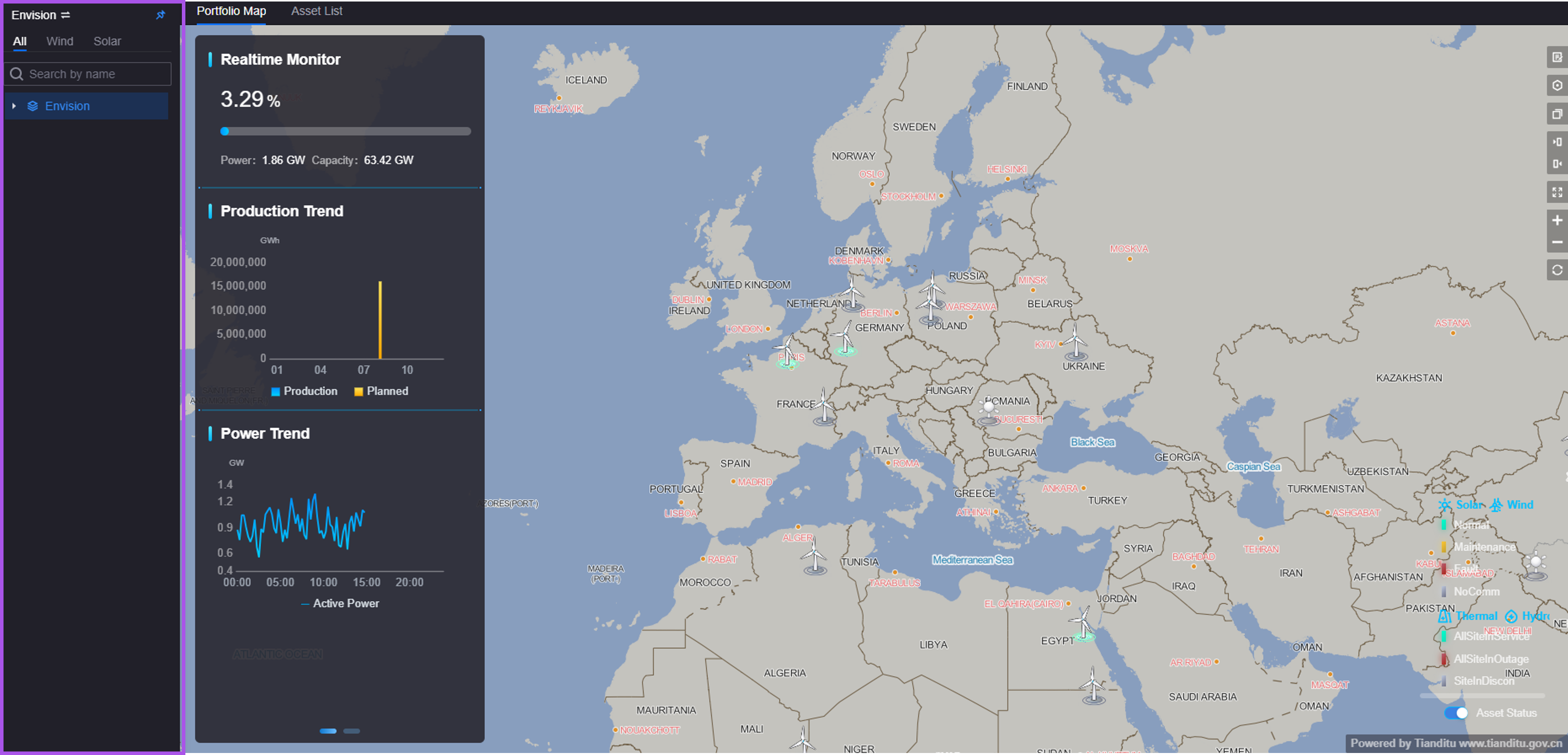
In some environments, the Unified Asset Tree sidebar supports floating, pinning, and dragging to resize. If the expanded sidebar displays a pin button in its lower-right corner, you can do the following:
Select the pin icon
 to pin the sidebar at the left side of the page.
Drag the sidebar’s right border to change its width.
Select the pin icon
 again to restore the floating sidebar.
Note
This interaction belongs to the legacy sidebar. Not all in-page asset filters support pinning or resizing; if the page does not show a pin button or draggable border, the current version or page form does not provide this capability.
Frequently Asked Questions
The tree switcher is missing. Confirm that your account can access multiple trees, the deployment supports multiple trees, and the menu URL does not disable the switcher.
The tree is empty or nodes are missing. Check asset permissions, the asset types and dimensions allowed by the page, and whether matching assets exist below the node.
A node is visible but cannot be selected. Check associated resources, node permission checks, and the asset level fixed by the current page.
An embedded page shows two asset trees. The embedded tool page should use the Landing Page’s asset context and hide its duplicate entry. Ask the application developer to check the integration configuration.
A linked page does not refresh after selection. Confirm that the embedded page integrates the Landing Page SDK and subscribes to the asset-filter context.